MEDICAL SCHOOL ATHENS GREECE
Medicine Athens Studies
6-Year Doctor of Medicine Programme in Athens
The University of Nicosia Medical School based in Athens, Greece —recognized as the largest medical school in Cyprus— offers a 6-year MD programme specifically structured for students entering directly from high school.
Accredited medical degree providing access to international career pathways.
Included in the
World Directory of Medical Schools
A highly diverse student community
representing more than 90 nationalities
My involvement with the Mobile Clinic has allowed me to gain hands-on experience with real patients from year 1. This is a crucial part of becoming a doctor, as you gain experience and understand the true nature of the profession we are dedicating our lives to. It is a great chance to also meet and interact with other medical students and give back to the local community.
- Manisha Weerakkody, Class of 2023, Sri Lanka
Career Prospects
With the dedicated support of our Student Success Team, every student is paired with a personal tutor and meets individually with Career Advisers to monitor academic progress and prepare for practical steps after graduation. The MD programme is structured to fulfil —and surpass— the standards outlined in the EU Directive on the recognition of professional qualifications (2005/36/EC), allowing graduates who are nationals of EU, EEA / EFTA countries and Switzerland to seek recognition of their qualification when applying for medical practice in those regions. Each country determines the specific point in its training pathway at which graduates may enter, along with any additional criteria they must meet (for example, proof of language proficiency).
Although the MD degree is accepted in many countries worldwide, applicants wishing to practise in their home nation are strongly encouraged to consult their respective national authorities. Throughout their studies, students receive guidance on preparing for national licensure examinations —such as the USMLE— based on their intended postgraduate route. Our Student Success Team also invites alumni and industry specialists to provide insights into professional expectations across different global regions, supporting students in shaping their career plans.
With a student body representing over 90 nationalities, you will learn and train alongside peers and faculty from diverse backgrounds, gaining an edge in the international healthcare environment. This accredited medical degree provides access to various medical practice pathways, offering extensive support for postgraduate placement preparation. Our graduates have secured opportunities in more than 350 medical institutions worldwide, including residency programmes, fellowships, internships, and research roles.
For further details regarding career prospects with this MD degree and information on licensure requirements, our Admissions Advisors are available to assist you.



PROFILE
General Objectives
This study programme offers students the chance to receive a high-standard medical education. Its overarching aims are to:
01
Prepare students to become highly capable physicians by equipping them with the knowledge, practical abilities, and professional attitudes required to meet the demands of contemporary medical practice.
02
Graduate doctors who are both skilled and compassionate, ready to work safely as junior clinicians and able to progress confidently in their chosen medical specialties.
03
Provide every student with the scientific, evidence-based foundation and hands-on experience needed to advance both intellectually and humanistically in the care of patients, including the immediate management of medical emergencies.
04
Cultivate in students a lifelong dedication to learning and to serving both individual patients and the wider community.
05
Encourage a holistic approach to medical practice that incorporates ethical, legal, psychological, and social dimensions of patient care.
06
Support the promotion of public health and well-being through disease prevention and engagement in research.
07
Help reinforce the role of Cyprus and Greece as regional leaders in high-quality medical education.
Programme Learning Outcomes
Knowledge
By the end of the programme, students are expected to be able to:
01
Describe normal human anatomy and physiology at the molecular, cellular, tissue, organ, and whole-body levels, spanning all stages of life from conception through older age.
02
Explain the scientific foundations behind major and frequently encountered disease mechanisms, such as inflammation, infectious processes, tumour development, and physical injury.
03
Outline fundamental pharmacological concepts and the characteristics of commonly prescribed drugs, including how they work, how the body processes them, their interactions, and possible adverse effects.
04
Discuss how genetics contributes to assessing disease risk and informs personalised medical approaches.
05
Explain the factors that shape typical human behaviour on both individual and societal levels.
06
Describe how psychological and sociological elements can influence disease susceptibility and affect therapeutic outcomes.
07
Explain the ways in which people cope with and respond to significant life changes, including the onset of illness.
08
Define the notion of “wellness” and discuss why lifestyle-related behaviours are essential for achieving optimal health.
09
Describe how epidemiological methods are used to assess and interpret population health.
10
Discuss how environmental, ecological, social, behavioural, occupational, and cultural influences shape health at personal, community, and societal scales.
11
Explain the concepts of primary, secondary, and tertiary prevention, along with the purpose of immunisation and screening programmes.
12
Outline the key principles involved in managing and preventing communicable diseases in both community and hospital settings.
13
Discuss the significance of nutrition and its impact on maintaining health and managing disease.
14
Explore global determinants of health and recognise how worldwide factors can affect health at the local level.
15
Explain the relevance and applications of both qualitative and quantitative research methods in scientific investigation.
16
Interpret commonly used statistical techniques applied in clinical practice and medical research.
17
Critically evaluate scientific studies, considering their design, results, analytical methods, and conclusions.
18
Discuss the role physicians play in gathering, interpreting, and utilising patient data.
19
Describe the core principles underpinning health informatics.

Skills
Upon finishing the programme, students should be capable of:
- Communicating with patients in a compassionate, clear, and respectful manner, and when appropriate, engaging effectively with their significant others while obtaining a focused and relevant medical history.
- Interacting professionally and efficiently with colleagues across all clinical and academic settings, including collaborative and group-based environments.
- Conveying information accurately and appropriately in spoken, written, and electronic forms.
- Maintaining precise clinical documentation and demonstrating competence in organising, managing, and recording information, including the proper use of relevant digital tools and information technology.
- Performing examinations of the major body systems in real clinical contexts.
- Evaluating, investigating, and treating patients safely and competently, applying sound clinical judgement throughout the decision-making process.
- Prescribing medications under supervision in a safe manner, including calculating dosages, issuing prescriptions, and understanding the principles of dispensing.
- Identifying and responding to life-threatening situations, delivering immediate care during medical emergencies, and providing essential First Aid and resuscitation.
Competencies
By the end of the programme, students should be able to:
01
Discuss and apply the core principles of medical professionalism, recognising that prioritising patient welfare and safety is fundamental to everyday clinical practice.
02
Collaborate effectively with all members of the multidisciplinary team, understanding both their own responsibilities and the roles of other healthcare professionals.
03
Explain and implement the foundational principles of ethical medical practice, including the obligation to respect all patients regardless of lifestyle, culture, beliefs, religion, race, colour, gender, sexual orientation, disability, age, or socioeconomic background.
04
Identify, discuss, and apply the ethical frameworks relevant to major dilemmas encountered in routine clinical work, such as safeguarding confidentiality and respecting patient autonomy.
05
Explain and uphold the importance of maintaining confidentiality, and consistently respect patient autonomy, dignity, and privacy.
06
Understand one’s legal and professional duties when accessing information for patient care, research, or educational purposes, and translate these duties into practice.
07
Demonstrate an appreciation of the need to act with honesty and integrity at all times, including the responsibility to engage in open disclosure when errors occur, and put these principles into action.
08
Recognise when patient consent is required, know how to obtain it appropriately, and apply this in practice—including understanding circumstances in which consent must be sought from a third party.
09
Identify how personal beliefs and biases may influence patient care, and explain and implement strategies to minimise their impact.
10
Describe and apply safeguarding principles for protecting children and vulnerable adults.
11
Show an ongoing commitment to lifelong learning and service to patients and the wider community.
12
Practise medicine in a holistic manner, taking into account ethical, legal, psychological, and social dimensions of health.
13
Promote health and well-being through preventive strategies and engagement in research.
14
Support efforts to strengthen Cyprus and Greece as regional leaders in medical education.

Curriculum
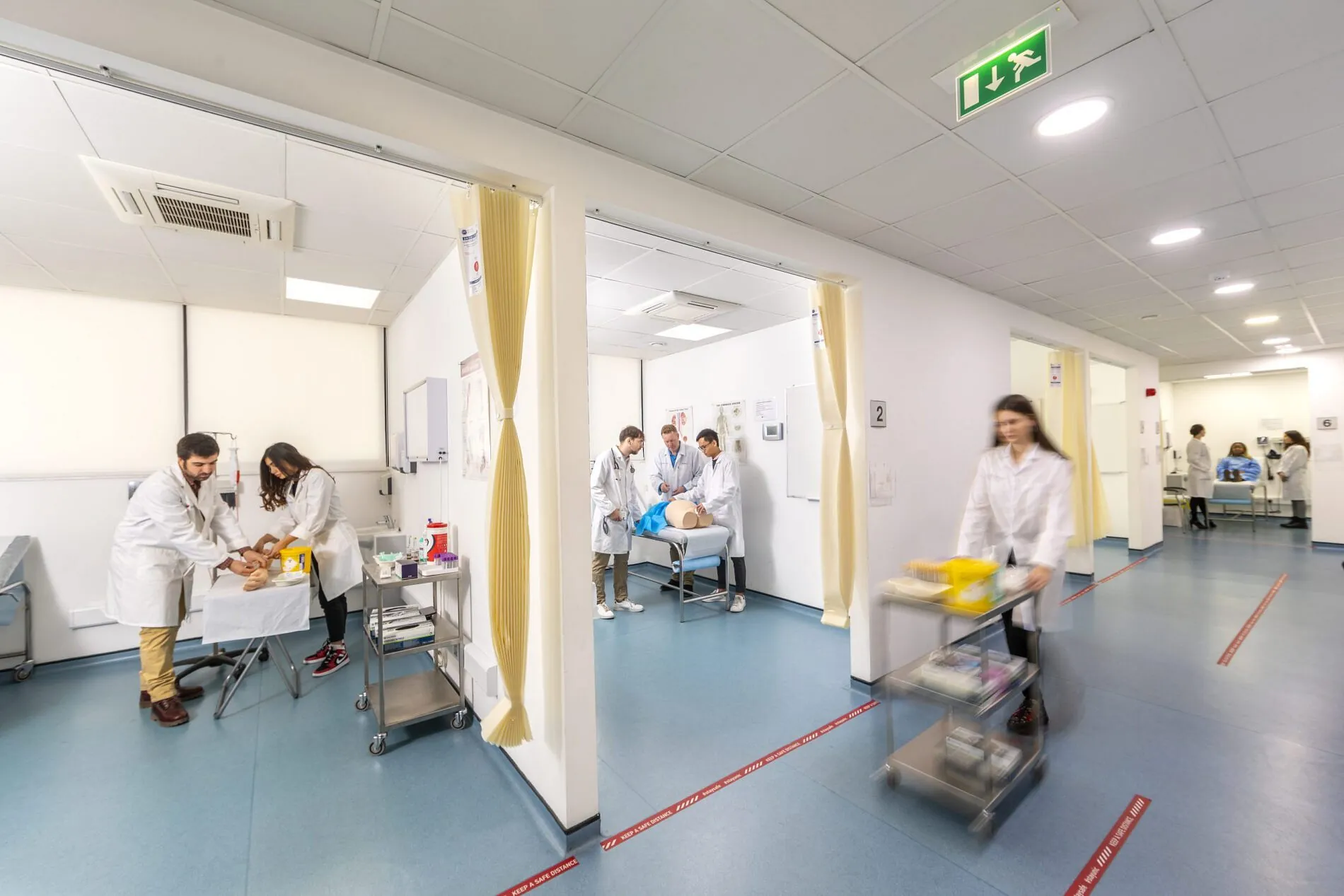
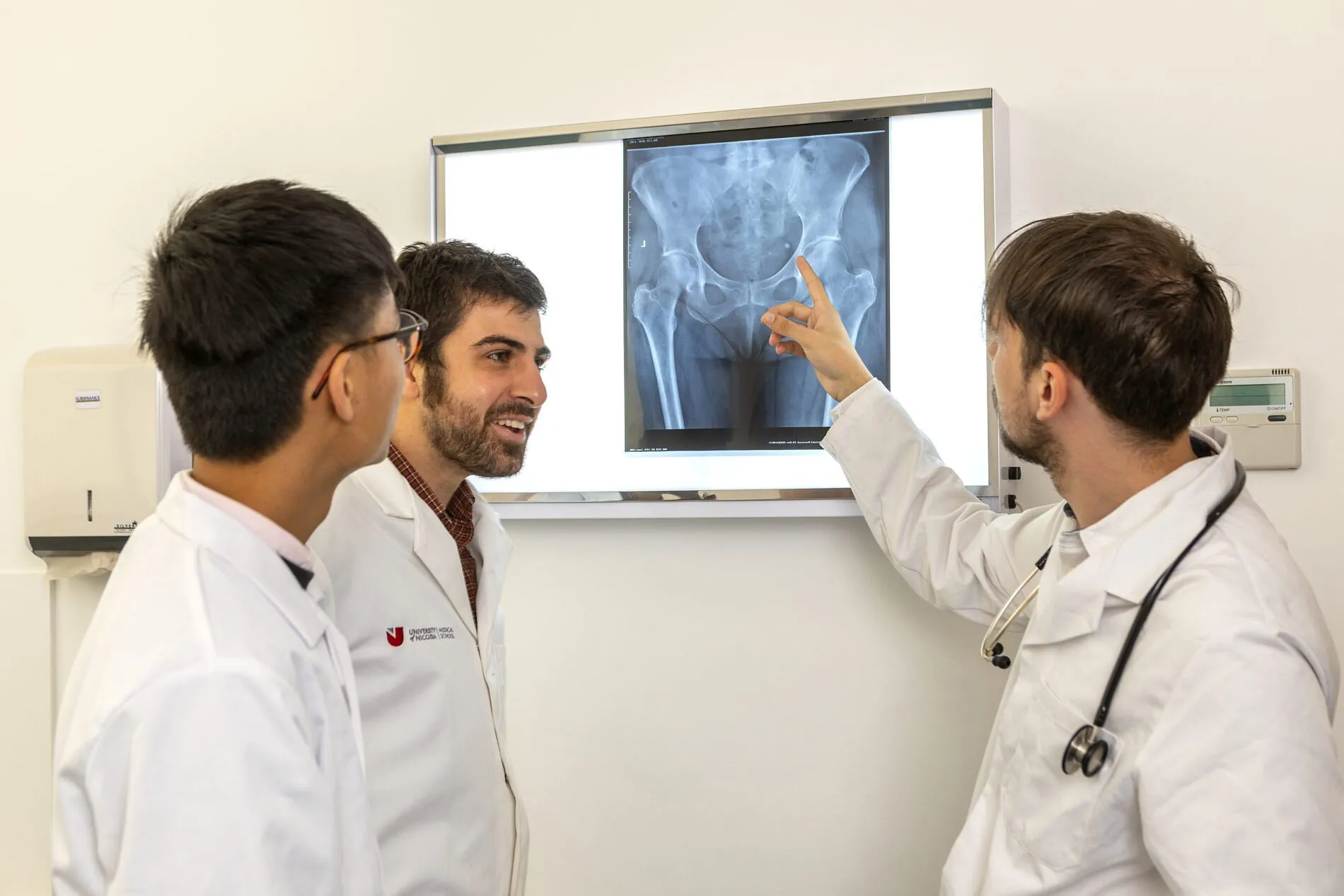
The curriculum is designed in a forward-thinking way, drawing on major international developments in medical education over recent decades as well as the most recent research in the field. It incorporates elements such as a student-focused approach, interactive small-group learning, modern technological tools, and both vertical and horizontal integration between basic and clinical sciences, along with a strong emphasis on community engagement.
Accreditation
The MD programme is accredited by the Cyprus Agency of Quality Assurance and Accreditation in Higher Education (CYQAA). Since CYQAA is recognised by the World Federation for Medical Education (WFME), the programme is evaluated according to WFME’s rigorous global standards for Basic Medical Education. The accreditation framework, developed in collaboration with the World Health Organization, ensures that the education provided meets high-quality and comprehensive international benchmarks.
Curriculum and Delivery
The MD Programme’s curriculum is forward-looking and grounded in the latest developments and research in medical education. Beyond meeting WFME standards, its design also takes into account the guidelines issued by professional bodies in Cyprus, Greece, and the European Union. Additionally, it draws on internationally recognised recommendations for undergraduate medical training, including those from the General Medical Council in the United Kingdom.
The programme extends over six years and comprises 360 ECTS credits. It is organised into the Health and Disease phase (the pre-clinical basic science component, Years 1–3), followed by a Transitional Year (Year 4) and the Clinical Years (Years 5–6). The curriculum aims to deliver clearly defined educational outcomes, integrating modern advancements in medical education—such as digital health and the intersection of climate and health—while fully aligning with higher-education standards in Cyprus, Greece, and the EU.
-
Curriculum:
Assessment
Assessment throughout the six years of the medical programme is structured to rigorously measure the knowledge, practical abilities, and professional behaviours required for medical practice.
Assessment of Academic Knowledge
Students’ understanding of theoretical content is evaluated through:
- Midterm examinations
- Final examinations
- Coursework assignments
Assessment of Practical Skills
Clinical and communication skills are evaluated via Objective Structured Clinical Examinations (OSCEs). These practical assessments simulate real clinical environments and involve interactions with both real and standardized patients. OSCE stations are assessed by trained examiners to ensure fairness and consistency.
Assessment of Professional Competencies
Professional values and behaviours are monitored continuously throughout all six years. This includes evaluating attendance, professional conduct, and reflective portfolio work. In Years 4–6, Workplace-Based Assessments further contribute to judging students’ clinical performance and professionalism within real clinical settings.
Comprehensive details regarding assessment requirements for each year of the MD Programme can be found in the Scheme of Assessment, which is provided to all students upon enrolment.
Ensuring High-Quality Assessment
The MD Programme maintains strict standards to ensure that all assessments are robust and of high quality. Every assessment is mapped directly to the curriculum and undergoes detailed review by Internal Moderators, an Assessment Panel, and External Examiners. Pass marks are determined through standard-setting methods appropriate to each specific type of examination. Examination outcomes, supported by psychometric analyses, are discussed during dedicated Results Meetings.
Formative assessment plays an essential role in supporting student learning. These assessments are followed by plenary feedback sessions from the relevant academic staff, with individual feedback meetings offered when necessary.
Admission Requirements
1. High School Leaving Certificate
Applicants must hold a High School Leaving Certificate with an overall score of 90% (equivalent to 18/20 in the Greek or Cypriot system), which must include strong performance in Biology and in one additional subject from Chemistry, Physics, or Mathematics.
Alternatively, applicants may qualify with:
- GCE A Levels: Grades ABB, including Biology, one of Chemistry/Physics/Maths, and one additional subject.
- International Baccalaureate: A total score of 32 points, with at least 16 points at Higher Level, including Biology and at least one of Chemistry, Physics, or Mathematics.
Each application is reviewed holistically. All academic results are considered to ensure that applicants have the appropriate background and achievement in Chemistry, Physics, and Mathematics to meet the academic demands of the curriculum.
The Medical School may also evaluate candidates from other educational systems. Applicants holding different qualifications are encouraged to contact us so we can determine their eligibility.
Individuals who already possess a Bachelor’s degree in a discipline relevant to Medicine may also be considered for entry into the first year of the programme.
2. English Language Requirements
Applicants must demonstrate English-language proficiency through one of the following:
- An overall IELTS score of 6.5, with 6.5 in writing and no component below 6.0, or an equivalent qualification.
- A TOEFL iBT score of 79.
- GCSE English grade 5 (or grade B under the previous grading scheme).
- A score of 5 in English at International Baccalaureate Standard Level.
- A score of 8 in English in the European Baccalaureate.
Applicants whose first language is English and who come from the UK, Ireland, the USA, Australia, or New Zealand are exempt from providing proof of proficiency.
Students from English-speaking provinces of Canada must submit an official statement from their high school confirming that English was the primary language of instruction. If such documentation cannot be provided, proof of English proficiency must be submitted in line with the programme’s admissions criteria.
3. Online Interview
All candidates must take part in an online interview, which aims to determine whether they possess the qualities and skills required to succeed in the programme and to practise medicine responsibly. Applicants should provide evidence—typically through volunteer or relevant experience—that they understand the biological, psychological, and social dimensions of medical practice, demonstrating their suitability for a medical career.
Applicants must meet both academic and non-academic requirements before enrolment. A conditional offer is not guaranteed to become unconditional solely on the basis of meeting the minimum academic results. The Admissions Committee uses a holistic approach when evaluating each applicant.
Students currently enrolled in accredited medical programmes and in good academic standing may be eligible to transfer into the second or third year of the UNIC MD programme. Eligibility is determined following an in-depth review of completed coursework by an Academic Panel.
Although the MD degree is recognised in many countries, applicants intending to practise in their home country should confirm recognition requirements with their national authorities.
For additional, please contact
info@athens-med.com